

The Importance of Choosing the Right Dryer
Selecting an appropriate dryer is a critical decision for households seeking efficient, sustainable, and space-conscious laundry solutions. Modern dryers must balance performance with practicality, particularly for urban dwellers or small-space living environments. The growing demand for compact, energy-efficient appliances has led to innovations in design, such as reduced footprint and advanced drying technologies. For households with limited storage or multiple laundry tasks, a dryer’s capacity, cycle versatility, and energy efficiency directly impact daily convenience and long-term utility. Additionally, the ability to accommodate delicate fabrics or specialized drying modes can significantly enhance user experience. As the U.S. continues to prioritize sustainable living, the integration of energy-saving certifications and smart control systems has become a key differentiator in the market. This review evaluates the Effidry S3 Compact Clothes Dryer, focusing on its technical specifications, usability, and alignment with contemporary laundry needs in 2026. By analyzing load capacity, energy efficiency, and design features, this assessment provides a data-driven framework for evaluating whether this appliance suits specific household requirements.
Quick Overview
| Feature | Details |
|---|---|
| Appliance Type | Freestanding Clothes Dryer |
| Load Capacity | 1.06 Cubic Feet |
| Voltage | 110 Volts |
| Power Rating | 1050 Watts |
| Drum Material | Stainless Steel |
| Drying Modes | 8 Specialized Functions (including Silk, Shoe, and Timed Drying) |
| Energy Efficiency | DOE Certified |
| Intended Use | Small Spaces, Apartments, Dorms |
| Installation | Plug-and-Play, No Drainage Required |
| Dimensions | 22.05 x 21.93 x 18.9 Inches |
| Weight | 33 Pounds |
| Included Components | Shoe Rack, Removable Dust Barrier |
The Effidry S3 Compact Dryer is designed for users with limited space and specific drying needs. Its 1.06 cubic feet capacity makes it ideal for small households or individuals with minimal laundry loads, while the 8 drying modes accommodate diverse fabric types and drying requirements. The absence of drainage and installation needs simplifies setup, making it a viable option for renters or those without dedicated laundry areas. The DOE certification ensures compliance with energy efficiency standards, aligning with broader sustainability goals in 2026.

Load Capacity and Household Suitability
The Effidry S3 Compact Dryer’s 1.06 cubic feet capacity is a defining factor in its suitability for specific household types. This load size is generally adequate for single users or small households with limited laundry volumes, such as individuals or couples with one or two occupants. For reference, a standard full-sized dryer typically ranges from 2.3 to 2.7 cubic feet, making the Effidry S3 approximately 40% smaller. This reduced capacity means it may not be suitable for households with frequent large laundry loads, such as families with multiple children or shared living spaces. However, the compact design compensates by optimizing space efficiency, allowing the appliance to fit in tight corners or small laundry rooms. The dryer’s ability to handle queen-size bed sheets and specialized drying functions for delicate fabrics suggests it is well-suited for users who prioritize versatility over bulk capacity. For households with consistent small loads, this size may offer a more efficient and manageable solution.

Space Efficiency and Installation Flexibility
The Effidry S3’s compact footprint of 22.05 x 21.93 x 18.9 inches allows it to fit in spaces where traditional dryers would be impractical. Its freestanding design and plug-and-play setup eliminate the need for permanent installation, making it ideal for apartments, dormitories, or temporary living situations. The absence of drainage requirements further simplifies placement, as users can position the dryer near a power outlet without worrying about venting or plumbing constraints. This flexibility is particularly advantageous in urban environments where space is limited. However, the small size also means that users must be mindful of load management to avoid overfilling, which could compromise drying efficiency and potentially damage fabrics. The inclusion of a removable dust barrier and a dedicated shoe rack demonstrates the manufacturer’s focus on maximizing usable space within the appliance’s constraints.
Fabric Care and Load Management
The dryer’s 1.06 cubic feet capacity necessitates careful load management to ensure optimal drying performance. While it can handle queen-size bed sheets and smaller loads of clothing, users must avoid overloading the drum, which could lead to uneven drying and increased energy consumption. The inclusion of specialized drying modes, such as the silk drying function, indicates a focus on preserving delicate fabrics. These modes likely involve lower heat settings and extended drying times, which may be beneficial for users with high-end or sensitive garments. However, the limited capacity means that users with larger laundry volumes may need to run multiple cycles, which could affect overall efficiency. The dryer’s ability to handle smaller loads makes it well-suited for individuals or small households, but it may not meet the needs of larger families or those with frequent heavy laundry tasks.
Energy Efficiency and Sustainability
The Effidry S3 Compact Dryer’s energy efficiency is a key consideration for environmentally conscious consumers. As a DOE-certified appliance, it meets the minimum energy performance standards set by the U.S. Department of Energy, ensuring it operates within acceptable efficiency thresholds. The 1050-watt power rating suggests it is designed for moderate energy use, balancing performance with sustainability. However, the exact energy consumption metrics, such as annual kilowatt-hour usage or Energy Factor (EF) ratings, are not explicitly provided in the product specifications. This lack of detailed data may limit the ability to compare its efficiency with other models in the 2026 market. The absence of a higher-efficiency certification, such as ENERGY STAR, could indicate that the dryer’s energy use is closer to the baseline rather than exceeding it. For users prioritizing sustainability, this may be a consideration, though the DOE certification still provides a baseline assurance of compliance with regulatory standards.
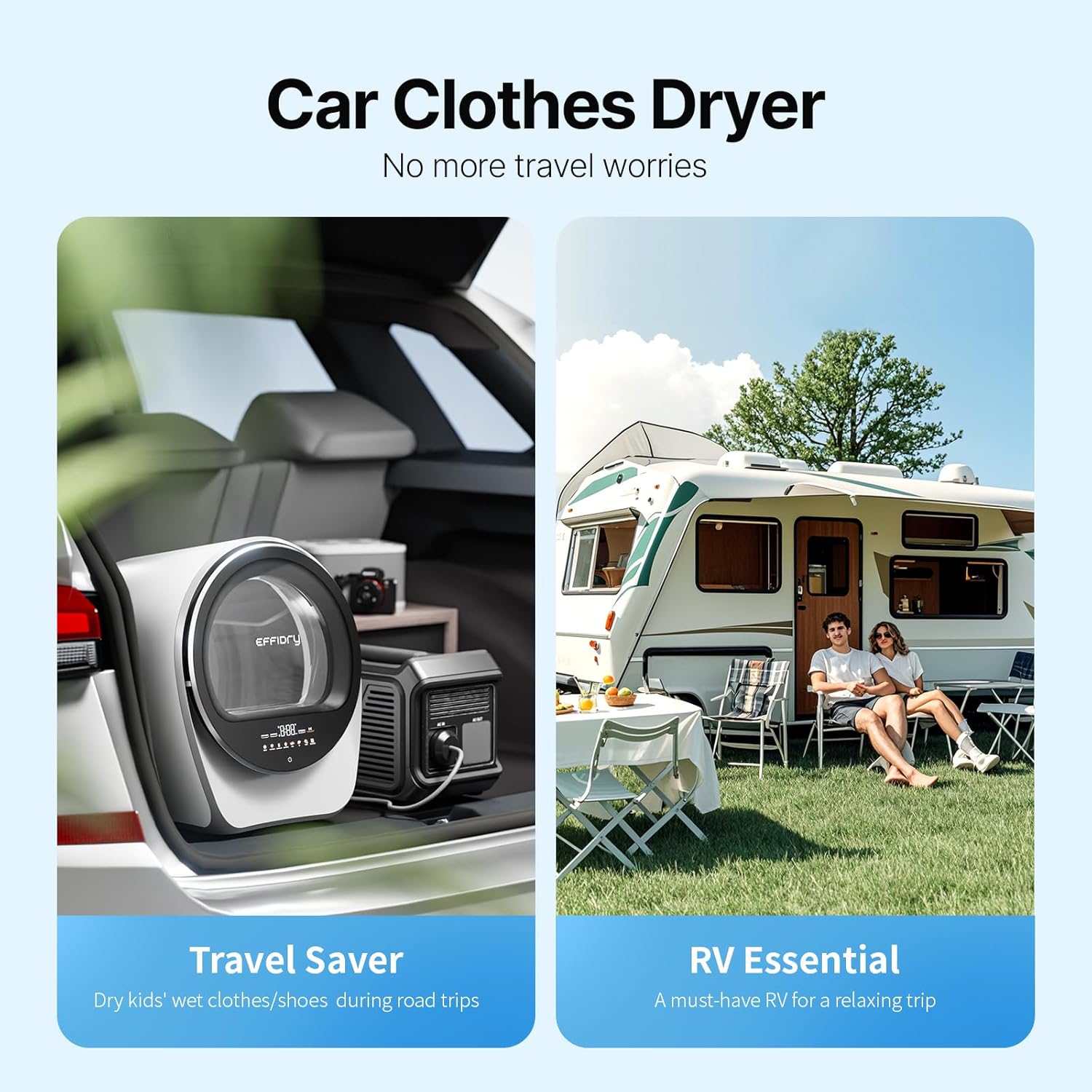
Operational Efficiency and Cost Considerations
The dryer’s energy efficiency is further supported by its design features, such as the dual variable-frequency motor and advanced control systems. These components likely contribute to optimized power usage by adjusting motor speed based on load requirements, which can reduce energy waste. The absence of a drainage system also minimizes the need for additional water or energy inputs, aligning with the appliance’s overall efficiency profile. However, without specific energy consumption data, it is challenging to quantify the exact impact on utility bills. Users should consider their local electricity rates and usage patterns to assess the long-term cost implications. While the dryer’s efficiency is adequate for its intended use, it may not be the most energy-efficient option available for households with higher laundry volumes or those seeking the highest sustainability benchmarks.
Drying Performance and Fabric Care
The Effidry S3 Compact Dryer’s drying performance is influenced by its capacity, control systems, and specialized modes. The 8 drying modes, including silk and shoe drying functions, suggest a focus on accommodating diverse fabric types and specific drying needs. The one-click intelligent control system, which utilizes multiple temperature and humidity sensors, aims to optimize drying times and prevent over-drying. This feature likely reduces energy waste by terminating the cycle once clothes reach the desired dryness, which can improve fabric longevity. However, the effectiveness of these sensors and their integration into the drying process is not explicitly detailed in the product specifications, making it difficult to assess their real-world impact without further data. The inclusion of a removable dust barrier and fine filters may also contribute to maintaining drum cleanliness, which can enhance drying performance over time by reducing lint buildup and improving air circulation.

Fabric-Specific Drying Modes
The dryer’s specialized modes, such as the silk drying function, are designed to address the unique needs of delicate fabrics. These modes likely involve lower heat settings and extended drying cycles to prevent damage to sensitive materials. The shoe drying function, which operates without rotating the drum, is a notable feature that caters to users who need to dry footwear without subjecting it to the mechanical stress of a spinning drum. This could be particularly beneficial for individuals with limited space or those who prefer to dry shoes separately from clothing. However, the absence of detailed information on how these modes affect drying efficiency or fabric care limits the ability to fully evaluate their effectiveness. Users with specific fabric care requirements should consider whether these modes align with their needs, as the dryer’s capacity and design may not be sufficient for heavy-duty or frequent use.
Noise and Vibration Control
The Effidry S3’s noise and vibration characteristics are critical factors in its usability, particularly for users in shared living spaces or apartments. While the product specifications do not explicitly mention noise levels, the inclusion of a dual variable-frequency motor and full-time variable frequency rotation suggests a design that may reduce operational noise compared to traditional dryers. The 1:1 forward and reverse rotation system is intended to disperse clothes more evenly, which could help minimize the mechanical noise associated with uneven load distribution. However, the absence of specific decibel ratings or vibration control features makes it challenging to assess the appliance’s noise profile without further data. Users in noise-sensitive environments should consider whether the dryer’s design adequately addresses these concerns, as excessive noise could impact overall user satisfaction.

Pros & Cons
Pros
- Compact Design: The 1.06 cubic feet capacity and streamlined dimensions make it ideal for small spaces, apartments, and dorms, optimizing space efficiency without sacrificing functionality.
- Versatile Drying Modes: With 8 specialized functions, including silk drying, shoe drying, and timed drying, the dryer accommodates a wide range of fabric types and user needs.
- Smart Control System: The one-click intelligent control, featuring multiple temperature and humidity sensors, optimizes drying times and ensures clothes are dried without over-drying, potentially improving fabric longevity.
- No Drainage Required: The absence of a drainage system simplifies installation and eliminates the need for additional plumbing or venting, making it a convenient option for renters or those without dedicated laundry areas.
- Energy Efficiency Certification: As a DOE-certified appliance, it meets regulatory standards for energy efficiency, aligning with broader sustainability goals in 2026.
- User-Friendly Features: The touch-screen interface and included shoe rack enhance usability, while the removable dust barrier and fine filters contribute to maintaining drum cleanliness over time.
Cons
- Limited Load Capacity: The 1.06 cubic feet capacity may not be sufficient for households with frequent large laundry loads, requiring multiple cycles and potentially affecting drying efficiency.
- Lack of Detailed Energy Data: While the dryer is DOE-certified, the absence of specific energy consumption metrics, such as annual kilowatt-hour usage or EF ratings, limits the ability to compare its efficiency with other models.
- No Higher-Efficiency Certification: The lack of ENERGY STAR certification suggests the dryer may not exceed baseline energy efficiency standards, which could be a consideration for users prioritizing sustainability.
- Potential Noise Concerns: Without specific noise level information, users in noise-sensitive environments may need to evaluate whether the dryer’s design adequately addresses operational noise.
- Design Trade-Offs: The compact size and simplified installation may result in reduced drying capacity and potentially higher energy use per load compared to larger, more powerful dryers.
Final Verdict: Who This Dryer Is Best For (and Who Should Skip It)
The Effidry S3 Compact Dryer is best suited for users with limited space and minimal laundry volumes, such as individuals, couples, or small households. Its 1.06 cubic feet capacity, combined with 8 specialized drying modes and a plug-and-play design, makes it an ideal choice for urban dwellers, apartment residents, or those without dedicated laundry areas. The inclusion of features like the silk drying function and shoe drying mode adds versatility, catering to users with specific fabric care needs. However, this dryer may not be the best option for households with frequent large laundry loads, as its limited capacity could lead to longer drying times and increased energy use per load. Additionally, users prioritizing maximum energy efficiency or those requiring higher-capacity drying solutions may find the Effidry S3 less suitable. For those seeking a compact, user-friendly dryer with basic to intermediate drying capabilities, the Effidry S3 offers a practical and space-conscious solution in 2026.

Frequently Asked Questions (FAQs)
What is the load capacity of the Effidry S3 Compact Dryer?
The Effidry S3 Compact Dryer has a 1.06 cubic feet load capacity, making it suitable for small households or individuals with minimal laundry volumes. This size is ideal for apartments, dorms, or spaces with limited storage.
How energy efficient is the Effidry S3 dryer?
The Effidry S3 is DOE-certified, meeting minimum energy efficiency standards. While it lacks ENERGY STAR certification, its 1050-watt power rating suggests moderate energy use, suitable for its intended small-space use.
Can the Effidry S3 dryer handle delicate fabrics like silk?
Yes, the dryer includes a specialized silk drying mode designed to preserve delicate fabrics. This mode likely uses lower heat settings and extended drying times to prevent damage to sensitive materials.
Does the Effidry S3 dryer require installation or drainage?
No, the Effidry S3 is a plug-and-play appliance with no drainage requirements. This makes it ideal for renters or users without access to dedicated laundry facilities.
What are the available drying modes on the Effidry S3 dryer?
The dryer offers 8 drying modes, including silk drying, shoe drying, timed drying, and 3 levels of temperature regulation. These modes provide flexibility for different fabric types and user preferences.
Is the Effidry S3 dryer suitable for small apartments?
Yes, the compact design and freestanding form factor make it an excellent choice for small apartments, dorm rooms, or shared living spaces with limited storage.
How does the Effidry S3 dryer manage noise and vibration?
The dryer features a dual variable-frequency motor and full-time rotation system to disperse clothes evenly, potentially reducing operational noise. However, specific decibel ratings are not provided in the product specifications.
What are the key features of the Effidry S3 dryer’s control system?
The dryer includes a touch-screen interface with intelligent control that uses multiple temperature and humidity sensors to optimize drying times. This system helps terminate cycles once clothes are dry, improving efficiency.