
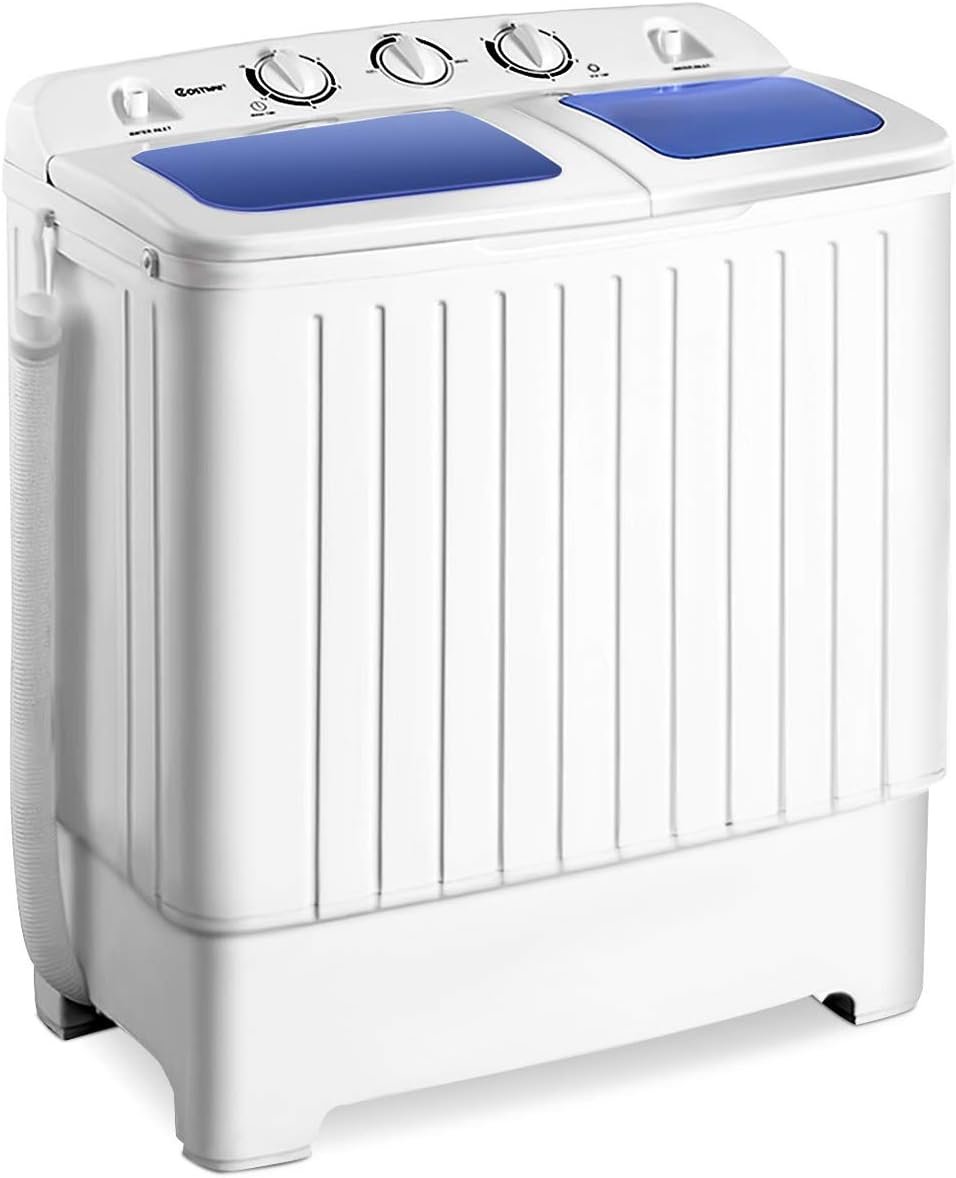
The Giantex Portable Mini Compact Twin Tub Washing Machine redefines efficiency and convenience for small-space households. This semi-automatic design combines portability with twin-tub functionality, offering a unique solution for those who lack dedicated laundry facilities. With its 20-pound capacity and compact footprint, this machine caters to busy families, renters, or travelers seeking a reliable alternative to traditional washers. As laundry needs evolve in 2026, understanding the trade-offs between compact design and performance becomes critical. This review evaluates how Giantex balances functionality, energy use, and user-friendliness to meet modern demands.
Quick Overview
| Feature | Details |
|---|---|
| Appliance Type | Twin-tub washing machine (washer only) |
| Load Capacity | 20 pounds (12 lbs washing, 8 lbs spinning) |
| Installation Type | Freestanding (no installation required) |
| Control System | Analog knob with 300W washing motor, 110W spinning motor |
| Key Cycles | Drain, Rinse, Spin (4000 cycles) |
| Energy Efficiency | No official rating; compact design may reduce water use |
| Intended Use | Small households, dorms, or apartments with limited space |
This machine’s lightweight frame and modular design translate to ease of use. Its semi-automatic operation allows users to manage washing cycles manually, avoiding the bulkiness of full-size machines. The twin-tub system streamlines laundry by combining washing and spinning in one unit, though it lacks advanced features found in modern appliances.

Load Capacity and Household Suitability

Compact Design for Small Spaces
The Giantex’s 20-pound capacity caters to smaller households or individuals with limited laundry volume. Its 15-inch depth and 24.8-inch width fit easily in cramped laundry rooms, dorms, or even under a kitchen counter. The twin-tub system’s 12-pound washing capacity means users may need to run multiple cycles for heavier loads, a trade-off for its compact size. While this limits suitability for large families, it excels in scenarios where space constraints are paramount.
The 8-pound spinning capacity further restricts options, as users must split loads to avoid overworking the spin function. This could be a drawback for households with frequent laundry needs, such as those with multiple children or shared living spaces. The machine’s lightweight build (28 pounds) ensures portability, but its weight may make frequent relocation challenging. For instance, moving it between a dorm room and a shared living space could require careful handling to avoid strain on the user.
Determining Household Fit
For single users or couples, the 20-pound capacity is ideal. Families with two children may find it adequate for daily laundry, though heavier items like bedding or towels would require multiple cycles. The machine’s 8-pound spinning capacity further restricts options, as users must split loads to avoid overworking the spin function. This could be a drawback for households with frequent laundry needs, such as those with multiple children or shared living spaces.
The 20-pound capacity also makes it suitable for students in dorms or individuals living in micro-apartments. However, households with high laundry volumes—such as those with four or more people—may find the capacity insufficient. For example, a family of four washing multiple loads of laundry daily would need to run the machine frequently, which could be time-consuming. Additionally, the 12-pound washing capacity means users must divide larger items like comforters or towels into smaller batches, increasing the time required for laundry.
Weight and Portability Considerations
Although the Giantex is lighter than most compact washers, its 28-pound weight makes it less ideal for frequent relocation. The ABS and polypropylene construction ensures durability, but the plastic components may feel less substantial than stainless-steel drums in traditional machines. Users should consider how often they’ll need to move the unit and whether the trade-off between portability and stability is worth it.
For instance, a user who needs to move the machine between different rooms or locations (e.g., from a dorm room to a shared apartment) may find the 28-pound weight cumbersome. While the machine’s lightweight frame allows for easy relocation, repeated movement could lead to wear on the plastic components over time. Additionally, the lack of casters or wheels means users must manually carry the machine, which could be a drawback for those with mobility limitations.
Cycle Variety and Fabric Care Flexibility

Semi-Automatic Operation for Customization
Unlike fully automatic machines, the Giantex relies on user input. With a knob-based interface, users can set washing and spinning times based on fabric types—15 minutes for a quick wash or 5 minutes for delicate items. This level of control allows for precise adjustments, such as extending spin times to reduce wrinkles in lightly soiled clothes. However, the lack of pre-programmed cycles may frustrate users accustomed to automated settings.
The 300W washing motor and 110W spinning motor offer sufficient power for lightweight loads, but they may struggle with heavily soiled garments. For example, a user washing a load of muddy jeans might need to extend the wash cycle beyond 15 minutes, which could affect the machine’s efficiency. The semi-automatic design also requires users to manually adjust parameters for different fabrics, which could be time-consuming for those unfamiliar with the machine’s operation.
Fabric Care and User Adjustments
The machine’s semi-automatic design caters to users who prioritize fabric care. By manually adjusting cycles, individuals can avoid over-washing delicate items or prolong spin times for heavier fabrics. The twin-tub system also allows users to separate stains and colors, though it lacks detergent compartments or specialized cycles for sensitive materials. This flexibility suits those who want to manage laundry by hand but still benefit from reduced physical effort.
However, the lack of advanced fabric care features may be a drawback for users with specific needs. For instance, someone washing silk or wool garments would need to manually adjust the spin speed to prevent damage, which requires a certain level of expertise. The machine’s simplicity could be both an advantage and a limitation, depending on the user’s experience with laundry appliances.
Water and Energy Use Trade-Offs
While the Giantex’s compact size may reduce water usage compared to standard machines, its energy efficiency is not explicitly rated. The 300W washing motor and 110W spinning motor suggest a focus on lightweight performance rather than high-capacity washing. Users should consider energy costs if they plan to run multiple cycles daily, though the machine’s manual operation allows for more mindful resource management.
For example, a user running multiple cycles to wash a large load of laundry might incur higher energy costs than with a more efficient machine. Additionally, the lack of an official energy efficiency rating means users must rely on the machine’s design and manual operation to optimize resource use. While this could be a drawback for environmentally conscious buyers, it also allows users to tailor their laundry habits to reduce waste.
Noise, Vibration, and Balance Control

Operational Sound Levels
The Giantex’s analog controls and plastic components contribute to a moderate noise level. Washing cycles produce a steady hum, while spinning can generate higher decibel levels—especially during prolonged use. While not as quiet as premium models, the machine’s noise profile is comparable to standard compact washers. Users in shared living spaces may find this audible, but the design prioritizes affordability over soundproofing.
The 110W spinning motor, while less powerful than standard washers, results in a noticeable hum during the spin cycle. For example, a user washing a load of lightly soiled clothes might experience a higher decibel level during the 5-minute spin cycle. This could be disruptive in quiet environments, such as a dorm room or apartment with thin walls. However, the machine’s lightweight build and compact size help minimize noise compared to larger appliances.
Vibration Management and Stability
The machine’s lightweight build minimizes shaking during operation, but uneven weight distribution could cause minor vibrations. The side-mounted filter and stainless-steel drum help stabilize the unit, though users should ensure proper balance by evenly distributing laundry. The spin tub’s cover plate must be placed above clothes to prevent excessive shaking, a detail that requires user attention but enhances long-term durability.
For example, if a user places the cover plate too low or unevenly, it could lead to excessive vibration during the spin cycle. This might affect the machine’s stability and potentially shorten its lifespan. The side-mounted filter also requires regular cleaning, which could be a minor inconvenience for users who prioritize maintenance.
Balance Control and Maintenance
While the Giantex lacks advanced balancing systems, its semi-automatic operation allows users to manually adjust load distribution. This approach requires more user involvement than fully automatic machines but ensures consistent performance. Regular cleaning of the filter and drum is recommended to maintain balance, though the machine’s design simplifies access to these components.
Users who prioritize stability should take care to distribute laundry evenly across the machine. For instance, a user washing a heavy load of towels would need to balance the weight carefully to prevent uneven spinning. The absence of advanced balancing features means users must rely on manual adjustments, which could be a drawback for those less experienced with laundry appliances.
Installation and Space Requirements

Freestanding Design for Flexibility
As a freestanding unit, the Giantex requires no installation, making it ideal for renters or those with limited access to permanent appliances. Its compact size eliminates the need for dedicated laundry rooms, though users should allocate space for both washing and spinning functions. The 15-inch depth ensures it fits in most small spaces, but crowded environments may necessitate careful placement.
The machine’s modular design includes all necessary accessories, allowing for quick setup without additional purchases. Its lightweight frame enables easy relocation between rooms, though frequent movement may strain the unit over time. Users should avoid dragging it across hard surfaces to prevent wear on the frame and ensure stability during operation.
Setup and Portability Considerations
The machine’s modular design includes all necessary accessories, allowing for quick setup without additional purchases. Its lightweight frame enables easy relocation between rooms, though frequent movement may strain the unit over time. Users should avoid dragging it across hard surfaces to prevent wear on the frame and ensure stability during operation.
For instance, a user who needs to move the machine between rooms or locations (e.g., from a dorm room to a shared apartment) may find the 28-pound weight cumbersome. The absence of casters or wheels means users must manually carry the machine, which could be a drawback for those with mobility limitations. However, the machine’s compact size and lightweight build make it easier to maneuver in tight spaces.
Space Constraints in Different Environments
For dorms or studio apartments, the Giantex’s footprint is a significant advantage. However, households with multiple laundry sources may find it less efficient than a full-sized washer. The machine’s portability is best suited for users who prioritize mobility over continuous use, though its compact size remains a standout feature in space-limited scenarios.
In environments with limited storage, such as a small studio apartment, the Giantex’s 15-inch depth and 24.8-inch width make it a practical choice. However, users with more space may find that the machine’s compact size is unnecessary. For example, a family living in a two-bedroom apartment might prefer a larger machine that can handle heavier loads without requiring multiple cycles.

Pros & Cons
Pros
- Portable and compact design for small spaces or travel use. The machine’s 15-inch depth and 24.8-inch width make it ideal for cramped laundromats, dorms, or apartments with limited storage. Its lightweight frame (28 pounds) ensures it can be easily moved between rooms or locations.
- Semi-automatic operation allows manual adjustments for fabric care. Users can customize wash and spin times based on the type of clothing, making it suitable for those who want to avoid over-washing delicate items or prolong spin times for heavier fabrics.
- Twin-tub system combines washing and spinning in one unit, reducing laundry steps. This design streamlines the process by eliminating the need for separate washing and drying machines, making it ideal for households with limited space.
- Lightweight construction (28 pounds) enables easy relocation between rooms. The machine’s portability is a significant advantage for users who need to move it frequently, such as students in dorms or individuals living in micro-apartments.
- User-friendly controls with a knob-based interface for simplicity. The analog controls are straightforward to use, making the machine accessible even for those with limited experience with laundry appliances.
- Durable ABS and polypropylene materials ensure long-term use in varied conditions. The machine’s construction is designed to withstand frequent use without compromising durability, making it a reliable option for households with moderate laundry needs.
Cons
- Limited capacity (20 pounds) may require multiple cycles for large loads. The 12-pound washing capacity and 8-pound spinning capacity mean users must divide heavier items like bedding or towels into smaller batches, increasing the time required for laundry.
- Manual operation lacks pre-programmed settings for convenience. The semi-automatic design requires users to manually adjust parameters for each load, which could be time-consuming for those unfamiliar with the machine’s operation.
- Higher noise levels during spinning compared to fully automatic machines. The 110W spinning motor produces a noticeable hum, which could be disruptive in quiet environments such as dorm rooms or apartments with thin walls.
- No energy efficiency rating or certifications for water conservation. While the machine’s compact size may reduce water usage, its lack of an official energy efficiency rating means users must rely on manual operation to optimize resource use.
- Requires user attention to balance laundry and maintain stability during cycles. The absence of advanced balancing features means users must manually adjust load distribution to prevent uneven spinning, which could affect the machine’s performance over time.
Final Verdict: Who This Washer or Dryer Is Best For (and Who Should Skip It)
The Giantex Portable Mini Compact Twin Tub Washing Machine excels as a solution for small households, students in dorms, or travelers needing portable laundry options. Its compact design and semi-automatic features make it ideal for users who prioritize mobility over high-capacity washing. However, those requiring frequent large-load cycles or advanced fabric care settings should consider larger, fully automatic machines.
For example, a single parent with two children might find the 20-pound capacity sufficient for daily laundry, as it can handle smaller loads of clothing and linens. However, a family with four children or a household with heavy laundry demands (such as multiple sets of bedding) may struggle with the limited capacity. The machine’s manual operation and semi-automatic design also mean that users must dedicate more time to managing laundry cycles, which could be a drawback for those seeking convenience.
While the Giantex’s lightweight build and user-friendliness are strengths, its limited capacity and manual operation may not suit households with heavy laundry demands. For 2026, the Giantex remains a viable option for those balancing space constraints with basic laundry needs, but it may not be the best choice for users requiring advanced features or higher capacity.

Frequently Asked Questions (FAQs)
What is the maximum capacity of the Giantex Portable Mini Compact Twin Tub Washing Machine?
The Giantex machine has a 20-pound capacity, with a dedicated 12-pound washing section and an 8-pound spinning capacity. This allows users to wash or spin smaller loads, making it ideal for small households or individuals with limited space.
How does the semi-automatic design of the Giantex machine compare to fully automatic washers?
The semi-automatic design of the Giantex requires users to manually set washing and spinning times, offering greater control over fabric care. While it lacks pre-programmed cycles, this flexibility allows for customized washing routines and reduced physical effort compared to hand-washing.
Is the Giantex Portable Mini Compact Twin Tub Washing Machine energy-efficient?
The machine does not have an official energy efficiency rating, but its compact design and 300W washing motor suggest a focus on lightweight performance. Users should consider energy costs if running multiple cycles daily, though the machine’s manual operation allows for more mindful resource management.
How noisy is the Giantex machine during operation?
The Giantex produces moderate noise levels, with washing cycles generating a steady hum and spinning cycles reaching higher decibels. While not as quiet as premium models, its noise profile is comparable to standard compact washers and suitable for most small-space environments.
Can the Giantex machine be used in a dorm or apartment with limited space?
Yes, the Giantex’s compact size (15 inches deep) and lightweight frame make it ideal for dorms or apartments. Its freestanding design eliminates the need for installation, though users should ensure adequate space for both washing and spinning functions.
What are the maintenance requirements for the Giantex machine?
Regular cleaning of the side-mounted filter and stainless-steel drum is recommended to maintain performance. The machine’s ABS and polypropylene construction ensures durability, but users should avoid dragging it across hard surfaces to prevent wear on the frame.
How does the Giantex compare to traditional front-load washers in terms of space?
The Giantex’s compact design and 15-inch depth make it significantly smaller than traditional front-load washers, ideal for small spaces. However, its twin-tub system requires separate washing and spinning areas, which may not suit all households.
Is the Giantex machine suitable for heavy laundry loads?
The 20-pound capacity may limit its effectiveness for large families or heavy loads, as users may need to split laundry into multiple cycles. Its semi-automatic design and lightweight build are better suited for smaller, frequent loads rather than bulk washing.